
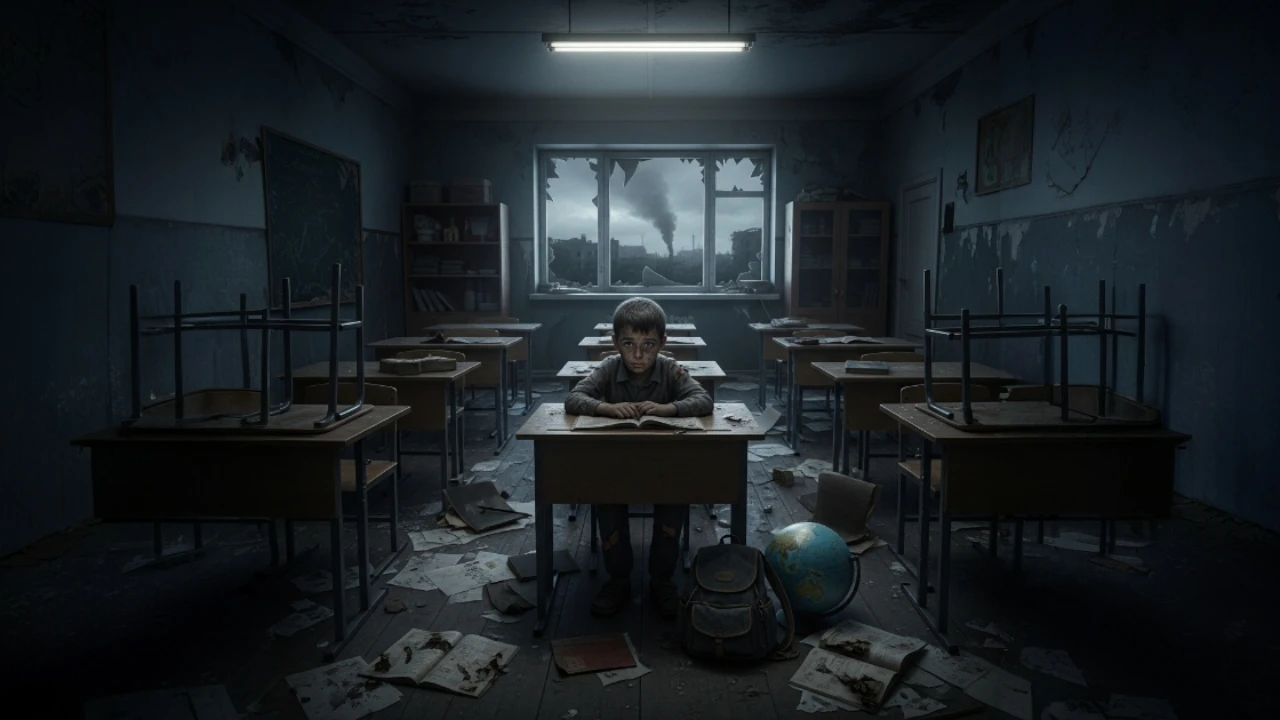
In the shadow of ongoing conflict, a profound and lasting transformation is reshaping the childhood of millions in Russia. The disruption of education extends far beyond the physical battlegrounds, reaching into classrooms and curricula to forge a generation shaped by ideology and militarization. This article explores the multi-faceted impact of war on Russia’s educational system, where lessons in history and science are being supplanted by state propaganda and military training, fundamentally altering the purpose of schooling from enlightenment to indoctrination
Understanding the Full Scope of Educational Disruption
When we think of war disrupting children’s education, images of bombed-out schools and interrupted lessons often come to mind. While this is the devastating reality in Ukraine, the situation within Russia itself presents a more insidious and structural form of disruption. Here, the education system is not being destroyed by missiles but is being systematically weaponized from within.
The changes are sweeping and state-mandated, designed to serve a national political agenda. The core mission of schools—to foster critical thinking, impart knowledge, and prepare students for civic life—is being aggressively repurposed. Instead, the system now prioritizes creating a loyal, militaristically-minded citizenry from a young age. This represents a fundamental betrayal of a child’s right to an education aimed at the full development of their personality, talents, and mental and physical abilities, as enshrined in the UN Convention on the Rights of the Child.
The Mechanisms of Disruption: How Education is Being Weaponized
The impact of war on Russian schools is not accidental; it is a coordinated policy implemented through several key mechanisms.
1. Curriculum Overhaul: From Physics to Field Strips
The most direct change has been to what children learn. In 2024, the Russian Ministry of Education replaced the standard “Fundamentals of Life Safety” course with a new subject titled “Fundamentals of Security and Defence of the Motherland.”
This isn’t just a name change. The new curriculum includes:
- Practical training in operating and manufacturing first-person view (FPV) drones.
- Military tactics and basic weapons handling.
- Patriotic education that directly ties historical lessons to justifications for the current war.
This shift signifies that preparing children for potential combat and supporting the war effort is now a formal, graded part of their secondary education.
2. The Saturation of Propaganda and “Patriotic” Lessons
Beyond new subjects, existing school hours are being saturated with state ideology. A mandatory weekly class called “Conversations about Important Things” was introduced to explain the government’s worldview, including its rationale for the “special military operation.”
An investigation by the news outlet Verstka estimated that approximately 12% of all academic time in Russian schools is now dedicated to various forms of propaganda, including:
- Lectures from military veterans.
- Letters and video calls to soldiers at the front.
- Celebrations and lessons that glorify the Russian military and frame the war as a heroic struggle.
3. The Militarization of Childhood: Yunarmia and Beyond
Parallel to school changes, state-sponsored youth movements have expanded dramatically. The Yunarmia (Young Army), a patriotic movement under the auspices of the Ministry of Defence, now boasts millions of members. Participation, while technically voluntary, is often heavily encouraged in schools.
Yunarmia activities normalize military life for children through:
- Wearing uniforms and learning drill commands.
- Handling demilitarized weapons.
- Attending military-patriotic summer camps that blend outdoor activities with combat training.
This creates a pipeline that familiarizes children with military structure and values long before they reach conscription age.
The Human Cost: Voices from the Classroom
The policy changes have a very real human impact on the three key groups in education: students, teachers, and parents.
- For Students: Education becomes a source of confusion and anxiety. Children are caught between state narratives at school and potentially different views at home. The pressure to conform and participate in patriotic acts can be immense, leaving little room for personal development or intellectual curiosity.
- For Teachers: Educators are placed in an impossible position. They are tasked with delivering state-mandated content that many may personally disagree with. Refusal or deviation from the script can lead to harassment, dismissal, or even criminal charges under laws against “discrediting” the military. Their role as guides and mentors is compromised.
- For Parents: Many parents feel powerless. They witness their children being fed a one-sided narrative but fear the consequences of providing counter-information at home, which could put the child at risk if repeated at school. Their right to guide their child’s moral and philosophical development is undermined by the state.
A Comparative View: Disruption in Russia vs. Ukraine
It’s crucial to distinguish the nature of educational disruption in Russia from the catastrophic impact on Ukraine. The contrast highlights how war affects children’s education differently based on geography and circumstance.
| Aspect of Disruption | In Russia | In Ukraine |
|---|---|---|
| Primary Cause | Ideological overhaul and militarization of curriculum. | Physical destruction of infrastructure and safety threats. |
| School Access | Largely uninterrupted; schools are physically open. | Severely disrupted; thousands of schools damaged or destroyed, leading to online/hybrid learning. |
| Curriculum Change | Imposed to promote patriotism and military readiness. | Adapted for resilience, with a focus on continuity and psychological support. |
| Goal of the State | To shape ideological beliefs and prepare for perpetual conflict. | To preserve the education system and protect children from physical harm. |
| International Response | Condemnation for violating children’s rights to unbiased education. | Support for humanitarian aid and rebuilding educational infrastructure. |
The Long-Term Consequences: Shaping a Generation
The effects of conflict on Russian students will reverberate for decades, shaping not just individual lives but the future fabric of society.
- Erosion of Critical Thinking: When education becomes about memorizing state-approved answers rather than questioning and exploring, it stifles intellectual growth. This can lead to a generation less equipped for innovation, scientific inquiry, and complex problem-solving.
- Normalization of Violence and Conflict: By integrating war propaganda and military training into childhood, the state normalizes violence as a primary tool for resolving disputes. This can decrease social empathy and increase societal aggression.
- Brain Drain and Disengagement: Ambitious, critical, or internationally-minded students and teachers may seek futures elsewhere. This exodus of talent further isolates the country and depletes its intellectual capital.
- Psychological Toll: Constant exposure to narratives of conflict, external threat, and mandatory patriotic performance can create chronic stress and anxiety in children, impacting their mental health and worldview.
Common Mistakes in Understanding This Issue
When analyzing how war disrupts children’s education in Russia, several misconceptions often arise.
- Mistake: Assuming the disruption is primarily about “closed schools.”
Reality: The schools are open, but their educational mission has been fundamentally corrupted. The damage is to content and purpose, not just schedule. - Mistake: Viewing it as a temporary wartime measure.
Reality: The changes to laws, curricula, and youth organizations are structural and long-term, designed to permanently reshape national identity. - Mistake: Believing children are oblivious to the propaganda.
Reality: Children are highly perceptive. Many experience cognitive dissonance, leading to confusion, anxiety, or cynical compliance rather than genuine belief. - Mistake: Overlooking the pressure on teachers.
Reality: Teachers are not mere propagandists; most are caught in a system that forces complicity under threat of severe punishment, destroying professional ethics.
FAQ: Your Questions Answered
Q1: Are Russian children directly learning how to fight in school?
A: Yes, to a degree. The new “Fundamentals of Security and Defence of the Motherland” course includes practical modules on drone operation and basic military training. Furthermore, participation in the Yunarmia youth movement, which is heavily promoted in schools, involves handling decommissioned weapons and learning field tactics.
Q2: Can parents opt their children out of these military-patriotic lessons?
A: Officially, there is a limited opt-out for the “Conversations about Important Things” class, but in practice, refusal is strongly discouraged and can mark the child and family as disloyal. For the mandatory defence curriculum, there is no opt-out. Resistance carries significant social and sometimes administrative risk.
Q3: How are teachers reacting to these changes?
A: Reactions are mixed but constrained by fear. Some support the state’s line, many are silently uncomfortable but comply to keep their jobs, and a small number have resigned or left the country. Open protest is extremely dangerous due to laws criminalizing “discrediting” the armed forces.
Q4: Is this kind of militarized education unique to Russia?
A: While many nations have patriotic education and junior military programs (like JROTC in the US), the scale, mandatory nature, and direct linkage to an ongoing war make Russia’s current approach exceptional in the modern context. It more closely resembles indoctrination models used by totalitarian states during the 20th century.
Q5: What is happening to education in Ukrainian territories occupied by Russia?
A: The disruption is even more severe and violent. The Russian curriculum is forcibly imposed, the Ukrainian language and history are banned, and teachers are forced to re-train or are replaced. Children are subjected to intense re-education and recruitment into youth movements like Yunarmia. The International Criminal Court has issued arrest warrants over the unlawful deportation and transfer of children from occupied Ukraine.
Q6: What can the international community do about this?
A: While direct intervention in Russia’s domestic policy is impossible, international bodies like the UN can continue to monitor, document, and condemn the violations of children’s rights to unbiased education. Supporting independent journalists and NGOs that report on the issue, and providing platforms for exiled Russian teachers and parents to speak out, are crucial ways to maintain global awareness.
Conclusion
The story of war disrupting children’s education in Russia is not one of shattered buildings but of a hijacked institution. It is a calculated transformation of schools into instruments for building a militarized, loyalist population. The right to education, which should be a pathway to opportunity and a broader understanding of the world, has been subverted into a tool for ideological conformity and preparation for conflict.
The true cost will be borne by a generation of Russian children who are being denied a full and free education. The damage—to their intellectual potential, their psychological well-being, and their understanding of their place in the world—may take even longer to heal than the physical scars of war elsewhere. Recognizing this subtle, systemic disruption is the first step toward understanding the profound and lasting legacy the current conflict is creating within Russian society itself.
Drive sales, earn commissions—apply now!
As soon as I observed this internet site I went on reddit to share some of the love with them.
Very interesting subject , thankyou for putting up.
Turn your network into income—apply to our affiliate program!
Sign up now and access top-converting affiliate offers!