
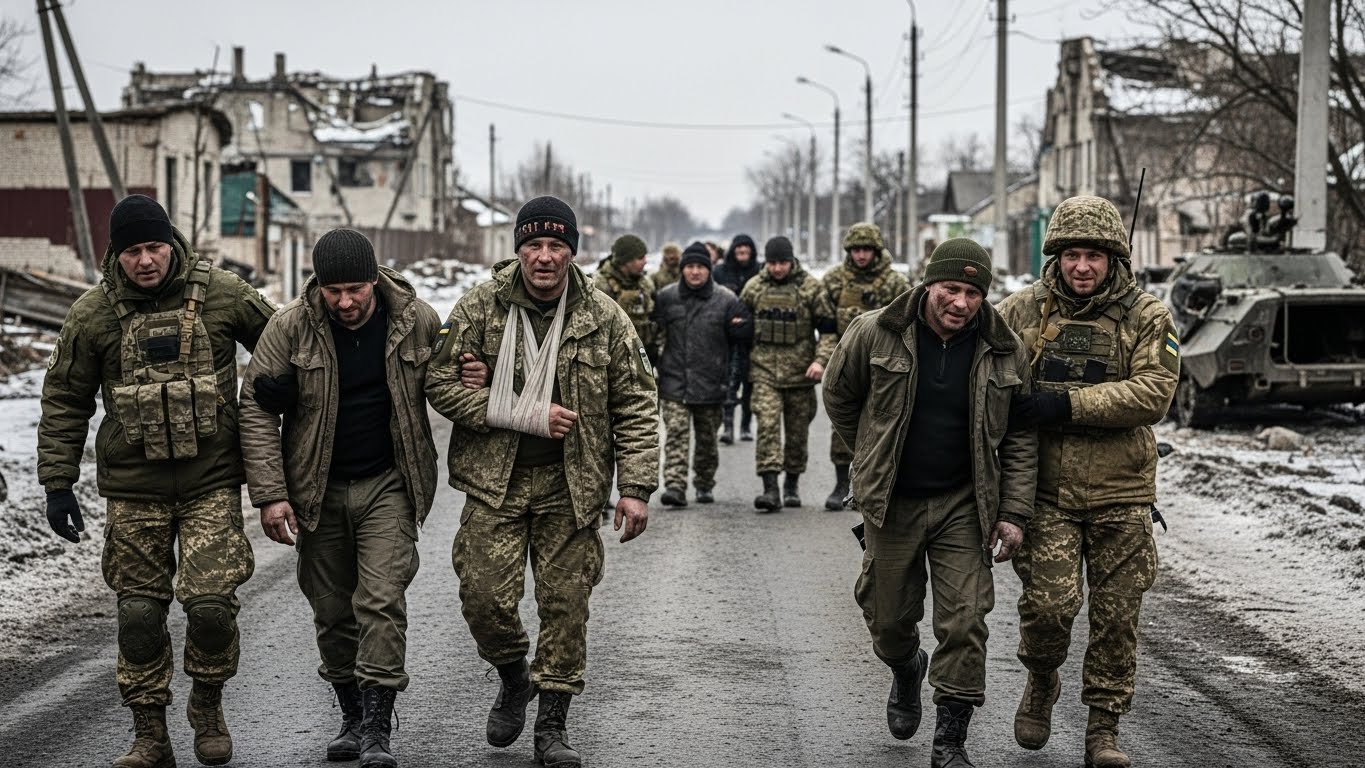
In the brutal calculus of the Russia-Ukraine war, the most direct impact of POW exchanges on captured Russian soldiers is not an abstract policy debate—it is the difference between a potential homecoming and indefinite captivity, between survival and death in a foreign prison. As the conflict drags on, these prisoner swaps have evolved from chaotic, sporadic events into a critical, institutionalized humanitarian process. For thousands of Russian soldiers held by Ukraine, their fate hinges on the delicate and often politicized negotiations that determine who gets to go home.
The Lifeline of Exchanges: From Negotiation to Return
Prisoner exchanges are not simple handovers; they are complex diplomatic and logistical operations with direct, life-altering consequences for every soldier involved.
For captured soldiers, the path to release typically follows these key stages:
- Negotiation and “Institutionalization”: Direct talks between Ukraine and Russia, sometimes mediated by third parties like Turkey, set the framework. Ukraine’s creation of the Coordination Headquarters for the Treatment of Prisoners of War has professionalized the process from its side. The ICRC acts as a neutral intermediary, facilitating the implementation of agreements, though it cannot force access or guarantee releases.
- The “Who” and “Why” of Selection: Decisions on which prisoners are included are strategic. Recent trends show a focus on returning younger soldiers (under 25), the severely wounded, and the sick. Exchanges often follow a direct numerical parity (e.g., “1,000 for 1,000”), but the perceived “value” or rank of certain prisoners can also influence talks.
- The Physical Handover and Immediate Aftermath: The actual swap occurs at designated border points. Soldiers are transported via buses and undergo initial medical checks. For Russian returnees, initial processing has sometimes occurred in a third country like Belarus before returning to Russia. This moment of transition is profoundly emotional, as captured by a released Ukrainian soldier’s description of crossing the border and seeing “kind, happy faces,” feeling as if he had “seen two worlds”.
The Stark Contrast: Conditions in Captivity and the Imperative for Exchange
The urgent need for timely exchanges is thrown into sharp relief by the documented conditions of captivity. The treatment of prisoners on both sides is governed by the Geneva Conventions, but adherence varies dramatically.
The table below summarizes the key differences in the detention systems that shape a prisoner’s experience and ultimate fate:
| Aspect of Captivity | For Russian Soldiers in Ukrainian Custody | For Ukrainian Soldiers in Russian Custody (as documented by human rights reports) |
|---|---|---|
| Access for Monitors | The ICRC has visited nearly 7,700 POWs on both sides, though mainly in Ukraine. Access, while not universal, is more consistently granted. | Systematic denial of access to the ICRC and independent monitors. |
| Treatment & Conditions | A 2024 UN report found initial mistreatment upon capture (beatings, threats) but noted abuse stopped once transferred to official detention centers. | Systematic, widespread torture reported: beatings, electric shocks, sexual violence, mock executions, and medical neglect. |
| POW Status Recognition | Generally recognized, allowing for rights under the Geneva Conventions. | Routinely denied; soldiers are often treated as “criminals” in a “special military operation,” stripping them of legal protections. |
| Communication with Families | Facilitated via ICRC messages and visits, providing crucial psychological relief. | Severely restricted or censored. Families are often left in the dark for months or years. |
| Mortality Risk in Custody | Lower, with fewer documented cases of death in custody. | High. An OSCE report cited at least 169 Ukrainian POWs killed or died in Russian custody, with autopsies pointing to torture and neglect. |
This disparity underscores a grim reality: while all captivity is traumatic, the systemic brutality and opacity of the Russian detention system make swift prisoner exchanges a more urgent matter of life and death for Ukrainian soldiers. For Russian families, the more structured Ukrainian system and ICRC access provide a vital, though agonizing, thread of communication and hope.
The Ripple Effects: Beyond the Individual Soldier
The impact of POW exchanges radiates far beyond the soldiers on the buses.
- On Families: An exchange ends an excruciating period of “ambiguous loss.” As one Ukrainian wife described waiting over a year for her captured husband, “I couldn’t sleep for months, and I turned heaven and earth upside down”. The return, or even the confirmation of a death through repatriated remains, allows families to begin processing their grief or celebration.
- On Military Morale and Society: Knowing there is a mechanism for return can bolster the willingness of soldiers to fight in high-risk situations. Conversely, Russia has used the freezing of exchanges as a psychological weapon, “to exploit the pain of families of the imprisoned as a political resource”.
- On Diplomacy and the War Itself: Exchanges are often the last remaining thread of direct dialogue between the warring states. The landmark “1,000 for 1,000” swap in May 2025 was the only tangible result of high-level talks in Istanbul. They serve as rare confidence-building measures in an otherwise total diplomatic freeze.
Common Misconceptions About POW Exchanges
- Misconception: Exchanges are purely humanitarian acts.
Reality: They are deeply political and strategic tools. The selection of prisoners, timing, and scale are influenced by battlefield dynamics, international pressure, and domestic political needs. - Misconception: All prisoners want to be exchanged.
Reality: While overwhelmingly true, some high-profile prisoners or those facing potential prosecution in their home country might have complex feelings. The process assumes a universal desire to return. - Misconception: The ICRC arranges the swaps.
Reality: The ICRC’s role is strictly as a neutral facilitator and implementer. It helps with logistics, monitors the handover, and visits detainees, but the deals are struck by the parties themselves. - Misconception: An “all-for-all” swap is a simple solution.
Reality: This is a stated goal but incredibly complex. It requires agreeing on total numbers (which are disputed), verifying identities, and dealing with individuals one side may deem “criminals” rather than POWs.
FAQs: POW Exchanges and Captured Russian Soldiers
How many Russian soldiers have been released in POW exchanges?
Exact figures are not always simultaneously released, but large swaps are reciprocal. For example, in the May 2025 “1,000 for 1,000” exchange, Russia stated it received 270 military personnel and 120 civilians in the first phase. Ukraine’s Coordination Headquarters reported over 60 exchanges since 2022, implying thousands of Russian soldiers have been returned.
What happens to Russian soldiers immediately after they are released in an exchange?
They are typically received by Russian authorities at a border crossing. Reports indicate they are then often taken to a third country like Belarus for initial medical treatment and processing before returning to Russia.
Are wounded or sick soldiers prioritized in exchanges?
Yes, recent agreements have specifically included categories for the severely wounded and sick, as well as soldiers under the age of 25. The repatriation of remains is also a major, parallel process to prisoner swaps.
Why does the ICRC not publicly condemn mistreatment of POWs to force better conditions?
The ICRC’s operational neutrality and confidential dialogue are its primary tools to gain access to prisoners on both sides. Public denunciation is a last resort, as it can lead to the complete expulsion of their staff, cutting off all assistance and monitoring.
How do the families of captured Russian soldiers find out if their loved one is alive?
The primary channel is through the ICRC’s Central Tracing Agency, which collects and transmits confidential information between the detaining power and the soldier’s country of origin. The ICRC had provided news to over 15,800 families as of late 2025.
Could POW exchanges lead to a wider ceasefire or peace?
While they are often called “confidence-building measures,” there is no direct guarantee. The May 2025 mega-swap occurred even as frontline fighting continued and high-level diplomacy stalled. However, they prove that lines of communication exist, which is a prerequisite for any future broader negotiations.
Conclusion
Prisoner exchanges in the Russia-Ukraine war are more than tactical pauses; they are a fragile but essential acknowledgment of shared humanity amid the devastation. For captured Russian soldiers, they represent the most concrete hope of survival and return. The evolution of these swaps from chaos to coordination demonstrates that even in the most intractable conflicts, mechanisms can be built to alleviate human suffering. As the war continues, the pressure to maintain and expand these exchanges remains immense, for they hold within them not just the fates of individual soldiers, but the faint, enduring possibility that dialogue, however narrowly focused, can persist.
I truly appreciate this post. I have been looking all over for this! Thank goodness I found it on Bing. You have made my day! Thx again
I have recently started a site, the info you offer on this web site has helped me tremendously. Thank you for all of your time & work.
Invite your network, boost your income—sign up for our affiliate program now!